
Biology and History
生物学と歴史
This page is dedicated to the biology and history of Japanese wolves featuring information about their role in religion, pop culture, the Japanese ecosystem and much more.
このページでは、ニホンオオカミの生物学と歴史に焦点を当て、宗教、ポップカルチャー、日本の生態系におけるニホンオオカミの役割に関する情報を紹介します。
The Two Wolves
二匹の狼
Ezo Wolf エゾオオカミ
(Canis lupus hattai)
Honshu Wolf ニホンオオカミ
(Canis lupus hodophilax)
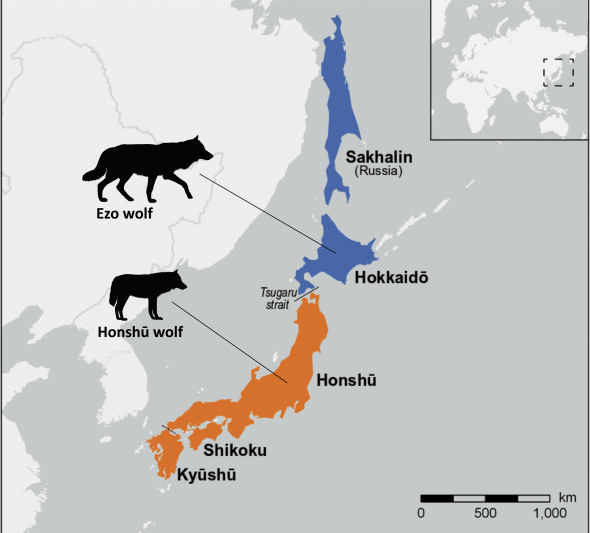
Japan has been the home of two different types of wolf, the Ezo Wolf (Hokkaido Wolf) and the Honshu Wolf (Japanese Wolf). Both of these wolves were endemic to Japan but were split by the Blakiston's Line, a faunal line which marks the boundary between Hokkaido and Honshu. The Ezo Wolf was labelled extinct in 1889 and the Honshu Wolf followed in 1905. This library is dedicated to the Honshu Wolf which will be referred to as the Japanese Wolf going forward.
日本にはかつて、エゾオオカミとニホンオオカミという2種類のオオカミが生息していました。どちらも日本固有種でしたが、北海道と本州の境界線であるブラキストン線によって分断されていました。エゾオオカミは1889年に絶滅し、本州オオカミは1905年に絶滅しました。当館はニホンオオカミを専門に扱っています。
A Long History
長い歴史
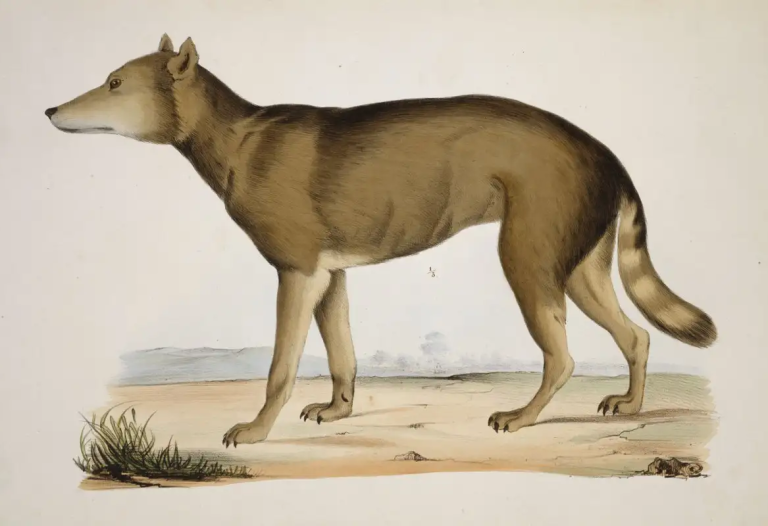
The Japanese wolf was first described in 1839 by Coenraad Jacob Temminck in his work Fauna Japonica. This was the first book on japanese wildlife to be written in a European language. The image shown is the illustration of the Japanese wolf which was provided in the book.
The Japanese Wolf is considered to be a relatively ancient type of wolf. Their ancestors diverged Pleistocene Siberian wolves around 17,000–40,000 and eventually hybridised with a later arriving lineage of Pleistocene and modern wolves according to a 2022 study.
ニホンオオカミは、1839年にコーエンラート・ヤコブ・テミンクによって著書『Fauna Japonica』(日本の動物相)で初めて記載されました。これは、ヨーロッパ語で書かれた日本の野生生物に関する最初の書籍でした。掲載されている画像は、この本に登場するニホンオオカミのイラストです。
ニホンオオカミは比較的古いオオカミの一種と考えられています。2022年の研究によると、その祖先は約1万7000年から4万年前に更新世のシベリアオオカミから分岐し、最終的には更新世以降のオオカミの系統や現代のオオカミの系統と交雑しました。
Wolf Worship
狼崇拝
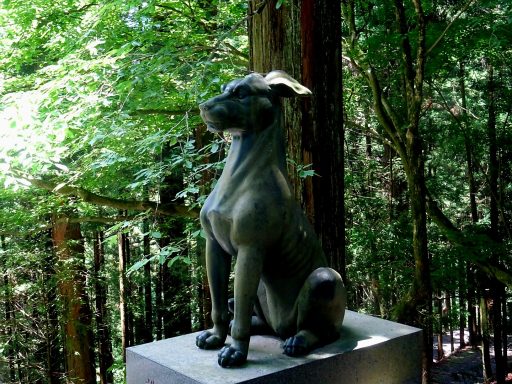
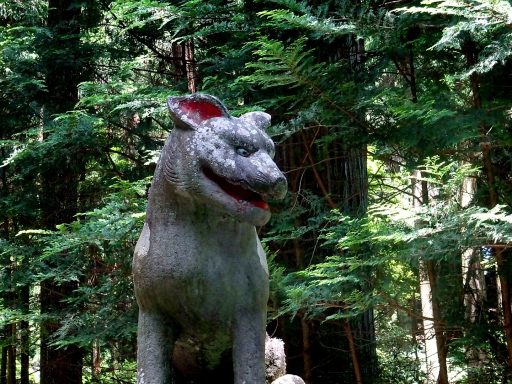
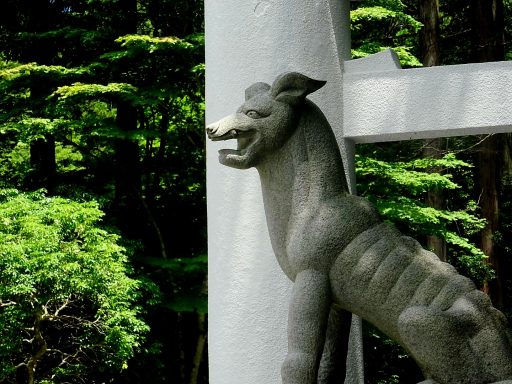
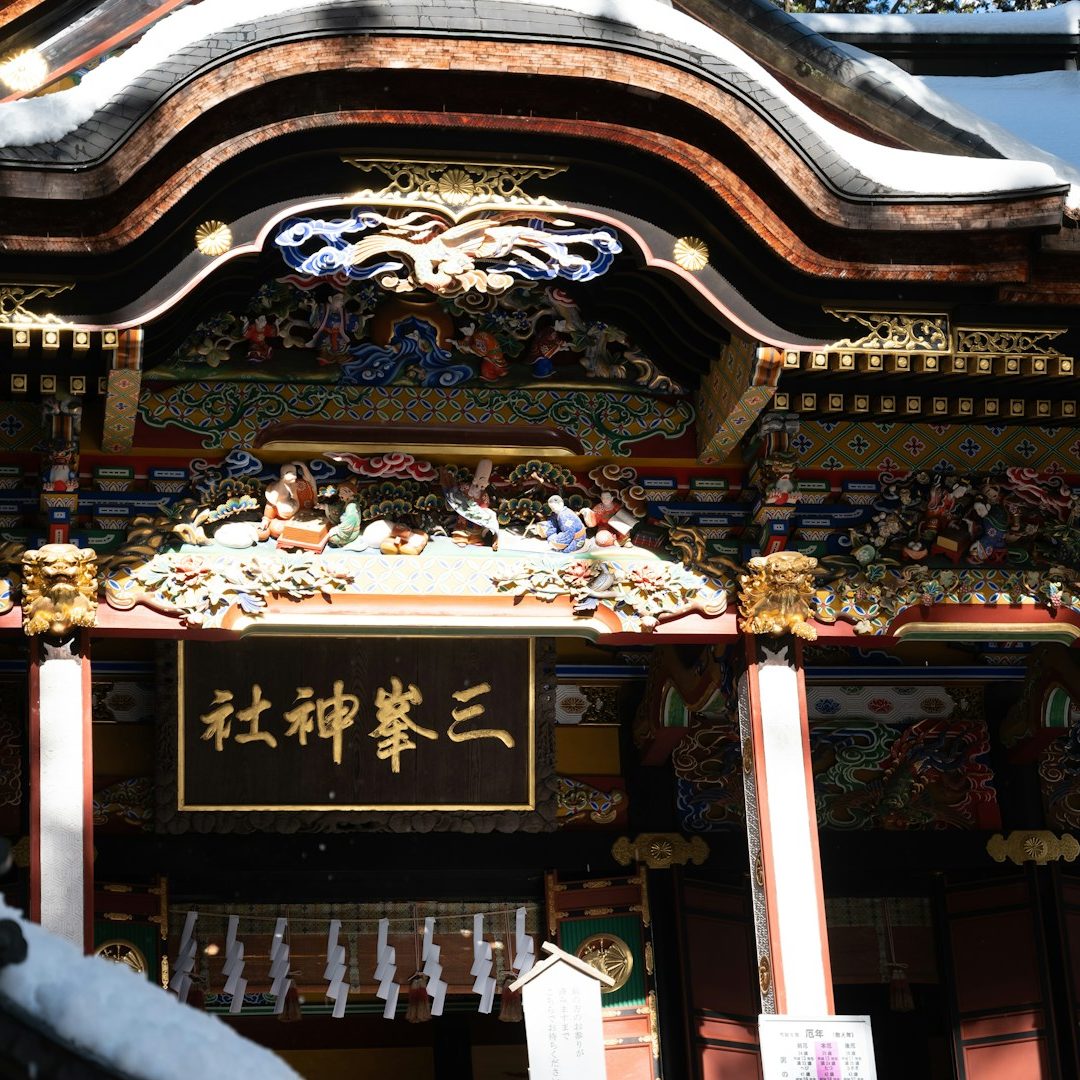
Mitsumine Shrine is considered the main shrine for wolf worship. Other shrines where wolves are worship include Yamatsumi Shrine and Musashi Mitake Shrine.
三峯神社は狼信仰の総本山とされています。狼を祀る神社としては、他に山津見神社や武蔵御嶽神社などがあります。